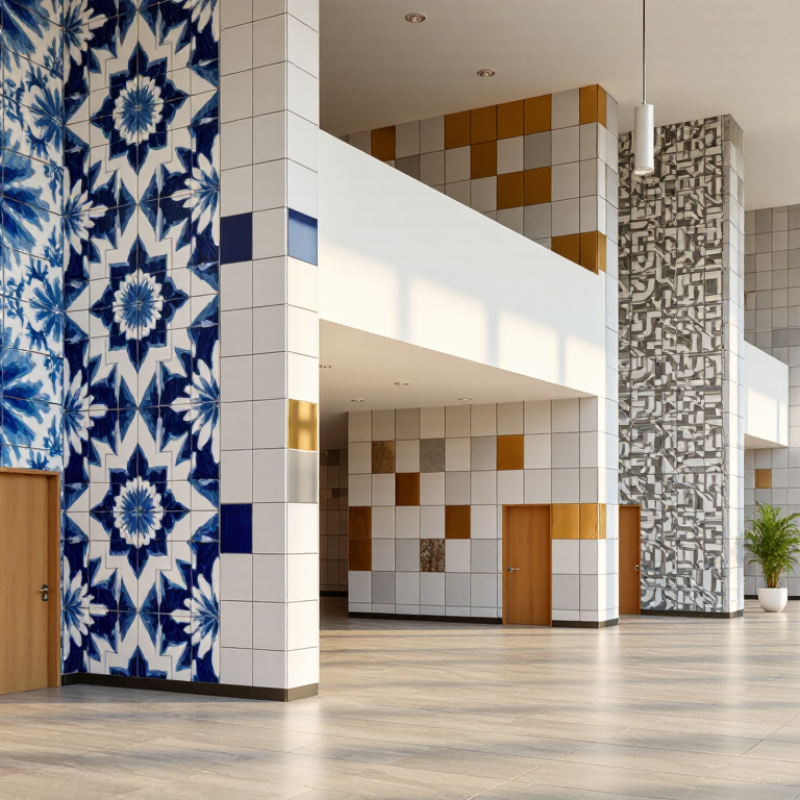
How to Choose Decorative Art Tiles for Global Projects?

Decorative Art Tiles can shape a project’s identity before visitors notice its furniture or lighting. A hand-painted pattern may suggest local heritage, while a geometric surface can create a modern international character. Choosing well requires more than matching colors. Designers must consider climate, installation conditions, maintenance, safety, and cultural meaning.

Experience matters on site. A tile that looks balanced in a showroom may feel too reflective beneath strong coastal sunlight. In a busy hotel lobby, deep grooves can collect dust and increase cleaning time. In humid regions, moisture resistance and grout performance deserve careful review. Product samples should be tested against real lighting, wall dimensions, and nearby materials. Small differences matter.

Reliable suppliers should provide clear technical data, batch information, care instructions, and consistent quality records. Independent testing can help confirm slip resistance, water absorption, fire performance, and durability where relevant. Local architects and installers can also identify practical risks that catalogues often miss. Standards vary between countries, so project teams must verify current regional requirements before approval.

The process is not perfectly predictable. Even experienced teams can underestimate color variation between production batches. Cultural references may also be misunderstood when copied without context. That mistake deserves reflection. A stronger approach combines creative ambition with respectful research, documented testing, and realistic maintenance planning. This guide explains how to evaluate Decorative Art Tiles for global projects, balancing visual impact with dependable performance.

How to Choose Decorative Art Tiles for Global Projects?

Define Project Scope: Climate, Culture, Codes, and Installation Conditions

Choosing decorative art tiles for a global project starts before selecting patterns or colors. Define the site conditions carefully. A coastal hotel may face salt air, strong sunlight, and wind-driven rain. A mountain visitor center may endure frost, thermal movement, and snowmelt. I inspect exposure, substrate, drainage, and cleaning routines with the project team. Small omissions become expensive repairs. They often do.

Culture matters as much as performance. A geometric motif may carry different meanings across regions. Confirm symbolism with local designers, community representatives, and the client’s users. Scale also changes perception. A sample that feels refined in a showroom may look crowded across a broad facade. I request full-size mock-ups whenever possible. This habit has prevented costly surprises, though not every decision becomes clear.

Codes and installation conditions determine whether a beautiful tile can be used responsibly. Check slip resistance, fire requirements, water absorption, structural loading, and accessibility rules for the destination. Confirm approved adhesives, joint widths, movement joints, and curing times with qualified local installers. Keep written records of test results and site changes. On one project, our first substrate review missed uneven moisture. We corrected it, but the delay exposed a weakness in our process. Good tile selection remains a shared, documented decision, not a final design gesture.

Classify Tile by ISO 13006 Water Absorption: ≤0.5% for Porcelain

How to Choose Decorative Art Tiles for Global Projects?

Water absorption is a practical starting point for selecting decorative art tiles. Under ISO 13006, porcelain tiles belong to Group BIa, with water absorption of 0.5% or less. This classification describes the tile body, not simply its surface appearance. Lower absorption can improve resistance to moisture penetration, frost-related stress, and repeated cleaning. However, it does not make a tile automatically stain-proof or installation-proof.

The 2024 Ceramic World Review reports global ceramic tile production at approximately 16 billion square metres in 2023. That scale shows why consistent classification matters across international projects. A project manager in a humid coastal hotel may require BIa porcelain for bathroom walls, terraces, or decorative facades. In contrast, a dry interior feature wall may not need the same performance level. Check laboratory test reports, batch records, and the applicable local building requirements.

I learned this the hard way.

A low-absorption tile can still fail when the substrate holds moisture, joints are poorly sealed, or movement is ignored. For exterior work, request freeze-thaw and slip-resistance data alongside ISO 13006 results. Confirm colour consistency under daylight, especially when artwork uses fine lines or pale pigments. The International Organization for Standardization also makes clear that test conditions influence reported performance. Therefore, compare results from equivalent methods, not attractive sample boards alone. A beautiful tile may be technically unsuitable. That possibility deserves attention before international shipping begins.

Specify Safety Performance: ANSI A326.3 DCOF ≥0.42 for Level Floors

How to Choose Decorative Art Tiles for Global Projects?

Decorative art tiles should support both visual identity and safe movement. For level floors, specify ANSI A326.3 DCOF ≥0.42 when wet conditions are expected. This benchmark is widely used for evaluating dynamic friction on walkable flooring. It does not guarantee complete slip prevention. Water, oil, dust, footwear, lighting, and maintenance still affect real performance. That detail matters.

Request a current test report from the tile supplier, not only a product brochure. Confirm the tested surface, finish, color, size, and production batch. A glossy decorative face may look elegant beside a lobby entrance, yet perform differently from a textured sample. Test the actual selected tile with the proposed grout and cleaning routine. Keep a sample near a mock entrance. Walk across it with damp footwear. Small details become obvious there.

Tile layout also influences perceived safety. Strong patterns can hide water, dirt, or uneven joints. Use contrasting borders carefully, especially in airports, hotels, and public corridors. Check local accessibility rules and project-specific requirements in every destination. An ANSI result is useful evidence, but it is not a substitute for local review. I have seen beautiful specifications fail because drainage was ignored. The tile was not the only problem. A realistic maintenance plan, proper slope, clean installation, and documented inspection create more dependable results.

How to Choose Decorative Art Tiles for Global Projects? - Specify Safety Performance: ANSI A326.3 DCOF ≥0.42 for Level Floors

Decorative art tile selection and safety specification matrix
Selection Dimension Recommended Requirement Why It Matters Project Verification
Primary floor application Specify a product tested to ANSI A326.3 with a wet DCOF of ≥ 0.42 for level interior floors expected to be walked upon when wet. Provides a measurable slip-resistance performance criterion for wet, level walking surfaces. Request the current test report and confirm the tested finish, color, texture, and lot are the same as the proposed tile.
Tile location Use floor-rated decorative tile on level floors; use wall-only art tile on vertical surfaces unless floor suitability is specifically documented. Decorative appearance does not establish suitability for pedestrian traffic, wet exposure, or abrasion. Review the technical data sheet, intended-use statement, and installation instructions.
Surface texture Prefer a stable, uniform texture that supports the required wet DCOF without sharp projections or excessive surface irregularity. Raised decoration, deep relief, or uneven edges can affect cleaning, drainage, foot contact, and accessibility. Review a full-size sample and inspect the installed mock-up under dry and wet conditions.
Tile size and joint layout Coordinate tile module, grout joint, and pattern repeat with the floor plan; avoid creating abrupt height changes at transitions. Small-format patterns may improve conformity to contours, while poor alignment or lippage can create trip hazards. Confirm allowable lippage, joint width, movement joints, and transitions with the applicable local code and tile standard.
Water absorption Select the absorption classification required by the project environment; porcelain tile is commonly defined as having water absorption of 0.5% or less under applicable ceramic tile classification standards. Lower absorption can support moisture resistance, but it does not replace wet-slip testing or proper installation. Check the manufacturer’s absorption test result and the project specification before approval.
Abrasion and traffic Match the tile’s documented abrasion or usage classification to the expected pedestrian traffic, cleaning frequency, and wheeled loads. Glazes, printed motifs, and relief details may wear differently in entrances, hospitality areas, retail spaces, and public corridors. Evaluate a sample against the project’s traffic category and maintenance equipment.
Wet-area exposure For entrances, wash areas, pool surrounds, kitchens, and other locations likely to become wet, require documented wet performance and a suitable drainage design. Slip risk depends on water, contaminants, footwear, slope, cleaning, and maintenance—not on tile appearance alone. Coordinate tile selection with slope, drainage, entrance matting, cleaning procedures, and local regulations.
Color and pattern contrast Use decorative contrast to support wayfinding and zoning without creating visual confusion or disguising changes in level. Strong patterns can affect perceived depth, edge visibility, and navigation for users with reduced vision. Review the pattern at the intended scale, lighting level, viewing distance, and accessibility conditions.
Cleaning and maintenance Specify compatible detergents, grout, sealers, and cleaning equipment; avoid residues that can reduce surface traction. Oil, soap, dust, polish, and unsuitable coatings can change in-service slip performance. Obtain a written maintenance schedule and test cleaning products on an approved mock-up.
Global project compliance Use ANSI A326.3 as the specified test method where applicable, then confirm local building, accessibility, fire, hygiene, and wet-area requirements. Regulatory requirements vary by country, building type, exposure, and installation condition. Have the project architect, code consultant, and qualified tile installer review the final specification.
Approval documentation Approve only after reviewing the product data sheet, ANSI A326.3 wet DCOF report, absorption data, installation method, grout specification, and maintenance plan. A complete submittal links laboratory performance with the exact product and the actual installed conditions. Retain approved samples, test reports, batch information, and installation records for project closeout.
Specification note: A wet DCOF value of ≥0.42 under ANSI A326.3 is a commonly specified threshold for level interior floors expected to be walked upon when wet. It is not a guarantee that a surface will never be slippery. Final performance also depends on water, contaminants, footwear, slope, drainage, cleaning, installation quality, and ongoing maintenance.

Match Durability to Traffic Using PEI Ratings and ISO 10545-7 Testing

Decorative art tiles can transform a hotel lobby, but beauty must survive daily movement.

For global projects, begin with the traffic pattern, not the color board. A quiet gallery entrance differs from a busy airport corridor. Consider grit, luggage wheels, wet shoes, and cleaning frequency. These details often decide whether a tile remains attractive.

PEI ratings help assess abrasion resistance on glazed tile surfaces. Higher classes generally suit heavier pedestrian use, while lower classes may fit walls or lightly used areas.

However, PEI is not a universal durability score. It does not measure impact, slip resistance, chemical exposure, or freeze-thaw performance.

ISO 10545-7 testing provides a controlled assessment of surface wear through repeated abrasion. Request the test method, result, and recommended application. Numbers need context.


I have seen design teams specify a beautiful low-wear tile near entrances, then revise the plan after reviewing sand and trolley traffic.

A better review places sample panels near real doors for several weeks. Check color changes under dry dust, muddy water, and routine cleaning.

One overlooked issue was grout staining. It changed the visual effect more than expected.

For multi-country projects, confirm local conditions and maintenance practices with qualified testing professionals. Keep spare tiles from the same production batch when feasible.

Specifications can be imperfect. That is why field evidence matters.

Verify Global Compliance, Color Consistency, Lead Times, and Waste Rates

How to Choose Decorative Art Tiles for Global Projects?

Decorative art tiles must meet the destination market’s technical requirements before design approval. Check slip resistance, fire performance, material disclosures, packaging rules, and installation guidance. Requirements can differ between countries, cities, and building types. Ask for current test reports, not old certificates. A local compliance consultant can identify gaps early. This step is often underestimated.

Color consistency needs more than a digital sample. Request physical panels from the planned production batch. Compare them under daylight, warm lighting, and showroom LEDs. Record the approved reference tile with photographs and measured color data. Glaze variation may be intentional, but uncontrolled variation can damage a large lobby’s appearance. I once accepted a small sample too quickly. The full batch looked warmer.

Lead times should include approvals, mold preparation, production, inspection, shipping, customs clearance, and site delivery. Add time for damaged cartons or remake requests. A realistic schedule beats an optimistic promise. Confirm production capacity in writing, especially for complex relief patterns. Keep a small reserve quantity. It may save a wall installation later.

Waste rates deserve practical measurement. Complex cuts, corner pieces, and fragile finishes create more loss than flat tiles. Create a cutting map before ordering. Separate production waste from installation waste. A five-percent allowance may be inadequate for intricate layouts. Yet excessive over-ordering ties up budget and storage space. Recheck the estimate after the first installation area; actual site conditions often challenge the spreadsheet.