How to Find China Top Insulated Thermos Suppliers?
Finding China’s top Insulated Thermos suppliers requires more than comparing prices on a marketplace. A dependable supplier must prove manufacturing capability, material quality, and consistent delivery performance. The best candidates usually provide factory evidence, product testing records, and clear export experience.
Dr. Michael E. Brown, a thermal-packaging consultant, once noted, “A thermos earns trust through measured performance, not attractive specifications.” This principle is practical. Ask whether the supplier uses food-grade stainless steel, reliable vacuum-sealing equipment, and documented insulation tests. A serious factory should explain its steel grade, lid structure, coating process, and temperature-retention results without avoiding specific questions.
Look closely.
Request samples before discussing large orders. Fill each sample with hot water, record the temperature, and inspect the exterior after several hours. Test the lid over a clean kitchen towel. Small leaks often reveal weak sealing control. You should also review factory audit reports, production photos, certification documents, and customer references. However, certificates can be outdated, incomplete, or unrelated to the exact model.
That part is easy to miss.
Supplier selection also involves communication. Can the team answer technical questions clearly? Can it manage logo printing, packaging changes, replacement parts, and shipping schedules? These details become expensive when ignored. A supplier may offer a low unit price but use inconsistent vacuum performance between batches. I have seen buyers focus too heavily on appearance and overlook inspection standards.
The strongest sourcing decision combines evidence, samples, transparent communication, and independent verification. China offers excellent Insulated Thermos manufacturers, but quality is not automatic. Careful comparison remains necessary, even when the factory looks impressive online.
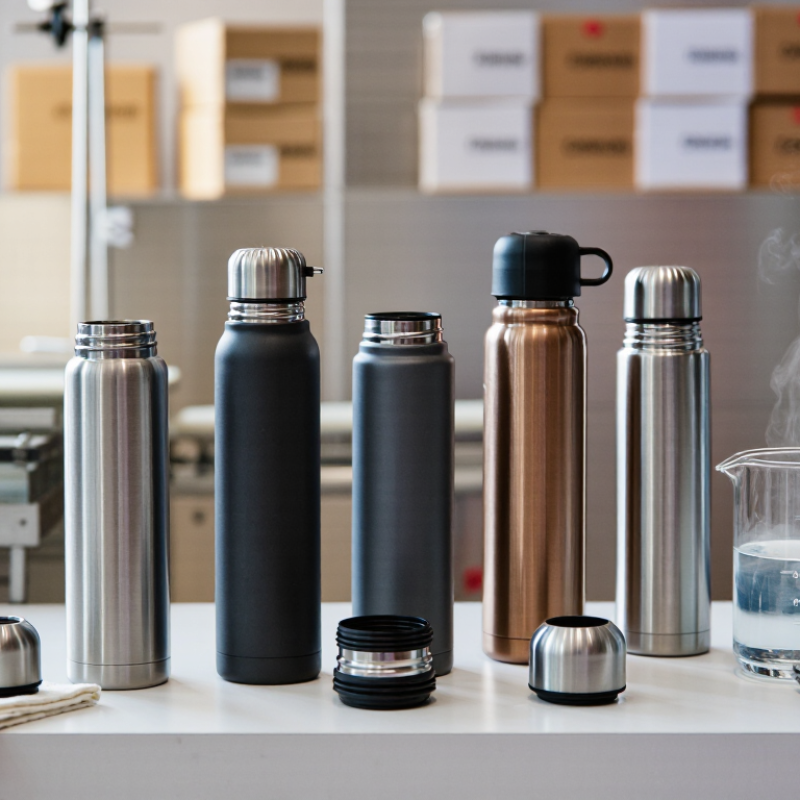
What Defines a Reliable China Insulated Thermos Supplier?
A reliable China insulated thermos supplier proves quality through repeatable evidence, not attractive photographs. In supplier evaluations, I ask for factory details, production experience, and current quality certifications. The workshop should show controlled welding, clean assembly areas, and clear inspection points. Supplier documents need verification. A certificate without a matching test report means little. Details matter.
Product performance deserves practical testing. Request samples from normal production, not specially prepared units. Check vacuum retention after 24 and 48 hours, lid sealing, surface finish, and odor. Test hot water carefully and inspect the exterior for unexpected heat. Food-contact materials should have traceable specifications and suitable laboratory reports. Ask how steel grades, silicone parts, and coatings are controlled. I once treated a smooth sample as proof of reliability, and that was too optimistic. Batch consistency matters more than one impressive unit.
A dependable supplier also communicates clearly when requirements change. Confirm minimum order quantities, lead times, packaging tests, spare-part support, and corrective-action procedures. Ask for inspection records before shipment and photos linked to batch numbers. A serious team explains defects instead of hiding them. It should identify who approves changes and who handles complaints. Factory size alone is not a quality guarantee. Smaller suppliers may offer closer attention, but their capacity needs honest checking.
Where to Search for Qualified Thermos Manufacturers in China?
To find qualified thermos manufacturers in China, search beyond general supplier lists. Verified B2B platforms can provide factory profiles, product photos, and export histories. However, online information may be incomplete. Check official trade fair exhibitor directories and local manufacturing associations for more reliable leads. Industrial areas in Zhejiang, Guangdong, and Jiangsu often have experienced stainless-steel drinkware producers.
A sourcing agent can help arrange factory visits, but request clear evidence of their experience. Ask for business licenses, production capacity, quality-control procedures, and recent export markets. A serious manufacturer should explain insulation structure, stainless-steel grades, coating methods, and lid assembly without vague promises. Request samples from different production batches. Test heat retention, leakage, odor, surface finish, and drop resistance. Small details matter.
I once trusted attractive samples too quickly. That was a mistake. The mass-production finish was less consistent. A pre-shipment inspection can identify problems with polishing, printing, packaging, and measurement accuracy. Ask whether the factory conducts vacuum testing and food-contact material checks. Review applicable safety documents for your target market. Certifications alone are not enough. Confirm the issuing organization and product scope. Keep written specifications, approved samples, tolerance limits, and replacement terms. Communication quality also reveals manufacturing discipline. Slow replies are not always a problem, but unclear answers deserve careful review.
How to Assess Product Quality and Customization Capabilities?
How to Find China Top Insulated Thermos Suppliers?
Product quality should be tested, not inferred from polished photographs. Grand View Research valued the global reusable water bottle market at USD 9.67 billion in 2023. It also forecasts a 4.6% annual growth rate through 2030. This demand attracts capable factories and inconsistent ones. Request stainless-steel certificates, preferably for 304 or 316 grades. Check vacuum retention after 12 and 24 hours. Measure temperature with calibrated equipment, not touch. Leakage tests should cover the lid, seal, and drinking valve. Drop testing matters too. A beautiful sample may still fail after one week.
Customization requires more than printing a logo. Ask whether the supplier controls mold development, color matching, laser engraving, and packaging assembly. Confirm the minimum order quantity for each option. Request a written drawing with dimensions, wall thickness, thread details, and tolerance limits. The Research and Markets industry outlook highlights personalization as a major growth factor in reusable drinkware. However, customization can reduce consistency when suppliers outsource key processes. That risk is easy to miss.
Review factory audit records, inspection reports, and corrective-action evidence. ISO 9001 certification supports process control, but it does not guarantee excellent thermos performance. Ask for production samples from different batches. Compare them. One uncomfortable lesson remains: fast replies do not prove manufacturing expertise. A reliable supplier explains failed tests, material limits, and realistic delivery risks. Suppliers unwilling to share such details deserve deeper questioning.
How to Find China’s Top Insulated Thermos Suppliers?
Use this 100-point supplier assessment model to compare product quality and customization capabilities before requesting samples or placing an order.
How to use the chart: Prioritize vacuum insulation performance, leak resistance, food-contact material documentation, and production consistency. Customization should be evaluated through prototype accuracy, logo or surface finishing, packaging flexibility, and tooling capability.
