China Top 10 Polyester Dog Leash Manufacturers?

Choosing a reliable supplier matters when a dog leash must survive daily walks, rain, pulling, and repeated handling. This guide examines China’s top 10 Polyester Dog Leash manufacturers through practical sourcing criteria. The review considers webbing density, stitching quality, clasp strength, swivel movement, color consistency, customization, production capacity, and quality-control procedures.

Dr. Zazie Todd, an applied animal behaviorist, writes, “The best dog training is reward-based.” Her point also supports careful leash selection. A comfortable grip and dependable connection can help handlers guide dogs calmly, without relying on harsh force. Small details matter. A frayed edge can become a serious weakness. A stiff metal clip can reduce handling comfort during a rainy walk.

This list is not a perfect ranking. Supplier performance can change with materials, factory teams, order volume, and inspection standards. A polished website proves little. Buyers should request samples, check stitching under tension, verify hardware specifications, and review production records before placing large orders. Factory audits and clear communication also reveal differences that catalogs often hide. Some manufacturers may excel at low minimum orders, while others offer stronger private-label support or advanced reflective designs. Price alone can mislead. The cheapest Polyester Dog Leash may create higher replacement costs later.

The manufacturers featured here are assessed for practical capability, product consistency, export experience, and suitability for different business needs. Readers should still test every shortlisted product independently. Real-world use exposes weaknesses that laboratory claims sometimes miss. That uncomfortable step is necessary.
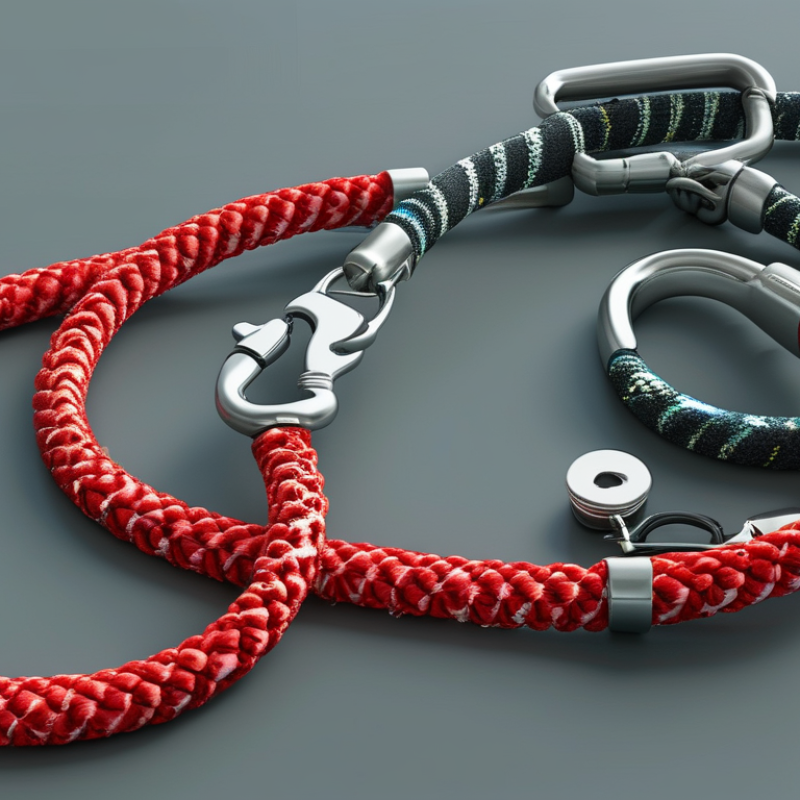
China Top 10 Polyester Dog Leash Manufacturers?

What Are Polyester Dog Leashes and Why Choose Chinese Manufacturers?

Polyester dog leashes are walking leads made from tightly woven synthetic fibers. The material is lightweight, flexible, and generally resistant to moisture. It dries faster than many natural fabrics after a rainy walk. A smooth weave also feels comfortable in the hand, especially during longer outings. However, polyester is not automatically strong. Weak stitching, rough edges, or poor hardware can still cause failure. Product quality depends on construction, not only the fiber.

Chinese manufacturers attract buyers through established textile and accessory supply chains. Many factories can coordinate yarn production, weaving, dyeing, sewing, and metal hardware assembly in one region. This can support practical customization, such as different lengths, handle padding, reflective threads, or packaging quantities. Experienced suppliers should provide material specifications, stitching details, colorfastness information, and inspection records. Sample testing remains essential. Pull the leash gradually, examine the clasp, and check whether the handle distorts under pressure. That simple test reveals useful problems. Chinese production is not automatically superior. That assumption is too simple. Some suppliers prioritize low prices, which may reduce thread density or hardware reliability. Buyers should compare samples, factory experience, quality controls, and communication before placing larger orders. A dependable leash should feel balanced, show even stitching, and maintain its shape after repeated use. Small flaws matter.

How to Evaluate China’s Top Polyester Dog Leash Manufacturers

How to Evaluate China’s Top Polyester Dog Leash Manufacturers

China’s leading polyester dog leash manufacturers should be assessed through evidence, not catalog photos. APPA’s 2024 industry report estimated U.S. pet spending at about $152 billion, increasing pressure for safer, longer-lasting accessories. Ask each factory for polyester denier, webbing width, stitching details, and clasp-load test results. A leash may look strong. Its bar-tack stitching often reveals more.

Use independent testing when possible. ISO 2062 can help verify yarn strength, while colorfastness testing checks whether rain or friction causes dye transfer. Textile Exchange’s 2024 Materials Market Report reported recycled polyester at roughly 14% of global fiber production in 2023. If a supplier claims recycled content, request transaction records or a recognized chain-of-custody certificate. Factory audits should review needle control, material storage, worker training, and batch traceability. Audits are useful, but they are not perfect. A clean visit cannot guarantee every shipment.

Tips: Request three production samples. Measure width, tensile performance, swivel movement, and seam failure. Test samples after soaking and repeated pulling. Confirm packaging, defect limits, and replacement terms in writing. Check whether the factory controls webbing production or only assembles imported components. That difference can affect consistency. Do not select the lowest quote automatically; weak hardware can create higher returns, even when the polyester feels excellent.

China Top 10 Polyester Dog Leash Manufacturers: How to Evaluate Them

This procurement scorecard uses practical evaluation weights for comparing ten shortlisted polyester dog leash manufacturers without displaying company or brand data. Material quality and load-bearing performance receive the highest weighting because webbing strength, stitching, hardware security, and durability directly affect product safety. Compliance, customization, MOQ, lead time, packaging, and traceability support the final purchasing decision.

Which Product Features Distinguish the Leading Ten Manufacturers?

China Top 10 Polyester Dog Leash Manufacturers: Which Product Features Distinguish the Leading Ten Manufacturers?

Leading polyester dog leash manufacturers compete through measurable details, not attractive catalogs alone. The American Pet Products Association reported US pet industry spending of $150.6 billion in 2024. That growth increases demand for safer, more durable accessories. The strongest manufacturers use dense woven polyester, reinforced box stitching, and tested metal clips. They also inspect seam strength, abrasion resistance, colorfastness, and hardware corrosion. These checks matter during rainy walks or sudden pulling. Some factories provide tensile-test records and batch traceability. That evidence supports reliable purchasing decisions.

Product design also separates the leading ten manufacturers. Useful features include reflective threads, padded handles, welded rings, and multiple length options. A smooth handle reduces friction during long walks. A secure swivel clip helps prevent twisting. Several manufacturers offer recycled polyester, low-plastic packaging, and custom labeling. Allied Market Research has projected continued expansion in the global pet accessories market, driven partly by premium and functional products. However, supplier claims still require verification. Marketing language can sound stronger than the actual test method.

Tips: Request a sample before bulk production. Measure webbing width and thickness yourself. Ask for breaking-load results, inspection photos, and hardware material details. Test the leash with controlled force, not only visual checks. Reflective yarn is useful, but it does not replace supervision. A perfect leash does not exist; I would still review stitching after repeated outdoor use.

How Do China’s Top Manufacturers Support Customization and Quality Control?

China’s leading polyester dog leash manufacturers support customization through controlled material and production choices. Buyers can specify webbing width, yarn denier, color, handle padding, stitching patterns, hardware, labels, and packaging. Experienced factories usually provide a pre-production sample before bulk manufacturing. That sample exposes practical issues, such as a stiff handle or a clasp that feels too heavy.

Demand is becoming more quality-sensitive. The American Pet Products Association reported that 66% of U.S. households owned a pet in 2023, representing about 86.9 million households. Its 2023 economic report also valued U.S. pet industry spending at $147 billion. These figures encourage manufacturers to improve durability, comfort, and traceability. Quality control may include incoming webbing checks, colorfastness testing, seam inspection, tensile testing, and repeated buckle operation. Some suppliers use ISO 9001-based procedures and independent laboratory inspections. However, certification alone proves little. A glossy sample can mislead.

Reliable suppliers record batch numbers, inspection results, and defect rates. They also compare production samples with approved specifications, not memory. Polyester webbing should resist fraying, while stitching must remain secure under repeated pulling. Packaging details need inspection too. Small mistakes happen. A printed logo may shift, or a dye lot may vary slightly. Good factories report these problems early and request approval before shipment. Buyers should still define measurable acceptance limits, because “premium quality” is too vague for consistent customization.

China Top 10 Polyester Dog Leash Manufacturers? - How Do China’s Top Manufacturers Support Customization and Quality Control?

No. Evaluation Dimension Practical Industry Benchmark Customization Support Quality-Control Checkpoint Recommended Buyer Evidence
1 Polyester Webbing High-tenacity woven polyester with consistent width, thickness, color, and edge finish. Custom webbing width, weave pattern, color, jacquard design, and recycled-polyester option. Incoming-material inspection, width measurement, color comparison, and seam-slippage review. Material specification sheet, color standard, and pre-production sample.
2 Leash Length and Width Common walking lengths are approximately 1.2–2.0 m; width should match the dog’s size and use case. Custom length, width, handle design, traffic-handle position, and packaging dimensions. Dimensional inspection against approved drawings with production tolerance records. Technical drawing, tolerance table, and signed sample approval.
3 Snap Hook and Hardware Hardware should operate smoothly, resist corrosion, and be appropriately sized for the intended load. Choice of zinc alloy, stainless steel, or other approved hardware; custom finish and plating color. Functional opening test, dimensional inspection, corrosion-resistance review, and attachment check. Hardware material declaration, coating specification, and test reports.
4 Load and Strength Testing Testing should cover webbing, stitching, D-rings, swivel hooks, and the complete assembled leash. Test levels can be defined by dog-weight category, product type, and buyer safety requirements. Static tensile or pull testing using a documented method and traceable samples. Laboratory or in-house test report stating method, sample size, force, and result.
5 Stitching and Reinforcement Stress points normally require reinforced box-X, bar-tack, or equivalent secure stitching. Custom thread color, stitch pattern, reinforcement position, and handle padding. Visual inspection for skipped stitches, loose threads, uneven seams, and reinforcement coverage. Approved sewing sample, workmanship standard, and inspection checklist.
6 Color and Print Performance Color should remain consistent between production lots and withstand normal light, rubbing, and moisture exposure. Pantone color matching, sublimation printing, reflective elements, labels, and woven logos. Color-difference review, dry/wet rubbing test, print adhesion check, and lot comparison. Approved color swatch, artwork proof, and color inspection record.
7 Comfort and Ergonomics The handle should reduce edge irritation and remain comfortable during routine walking. Neoprene padding, soft binding, traffic handle, reflective trim, and adjustable handle features. Edge-finish inspection, padding attachment check, and user-trial feedback during sampling. Ergonomic prototype, user-trial notes, and final construction specification.
8 Safety and Chemical Compliance Materials should comply with the destination market’s applicable chemical and product-safety requirements. Material substitutions and trims can be reviewed against restricted-substance requirements. Risk-based testing for dyes, coatings, metals, and other regulated substances. Recent third-party reports, declarations of conformity, and material traceability documents.
9 Production and Inspection System A controlled process should include incoming inspection, first-piece approval, in-process checks, and final inspection. Buyer-specific quality standards, AQL requirements, inspection frequency, and packaging instructions. Documented inspection records, defect classification, corrective-action process, and batch traceability. Quality manual, sample inspection report, corrective-action record, and factory audit evidence.
10 Packaging and Supply Flexibility Packaging should protect hardware and webbing while meeting retail, e-commerce, and shipping requirements. Custom hangtags, barcodes, carton marks, recyclable packaging, assortment packs, and private-label artwork. Packaging drop or transit review, barcode verification, quantity check, and carton inspection. Packaging dieline, barcode proof, carton specification, and pre-shipment inspection report.

Note: This comparison framework uses measurable product, customization, and quality-control criteria rather than unverified company rankings or brand-specific performance claims.

How Can Buyers Select the Right Polyester Dog Leash Supplier?

When comparing China’s top polyester dog leash manufacturers, buyers should inspect more than catalog photos. Ask for the polyester webbing specification, including width, thickness, weave density, and tensile strength. A reliable supplier should provide test records, not vague promises. Request samples in several colors and lengths. Check the edges for fraying, uneven stitching, and rough surfaces that may irritate a handler’s hand.

Hardware deserves equal attention. Examine snap hooks, D-rings, sliders, and rivets for smooth movement and secure attachment. Salt-spray or corrosion testing can reveal weak metal finishes. Stitching should include reinforced bar-tacks at high-stress points. Ask how each production batch is inspected. Factory photos help, but an independent audit offers stronger evidence. It may cost more.

Communication also shows supplier quality. Confirm minimum order quantities, sample charges, production time, packaging details, and replacement policies in writing. A capable manufacturer should explain material limits clearly instead of promising unlimited strength. Request a pre-shipment inspection, especially for large orders. Traceable batch numbers can support later quality investigations.

One practical warning remains: a polished sample can hide process problems. I would compare samples from different production dates, not just one attractive unit. Some buyers focus heavily on price and regret it after color bleeding or loose hardware appears. A small trial order may expose weaknesses early. It is not perfect, but it is safer than trusting a brochure.