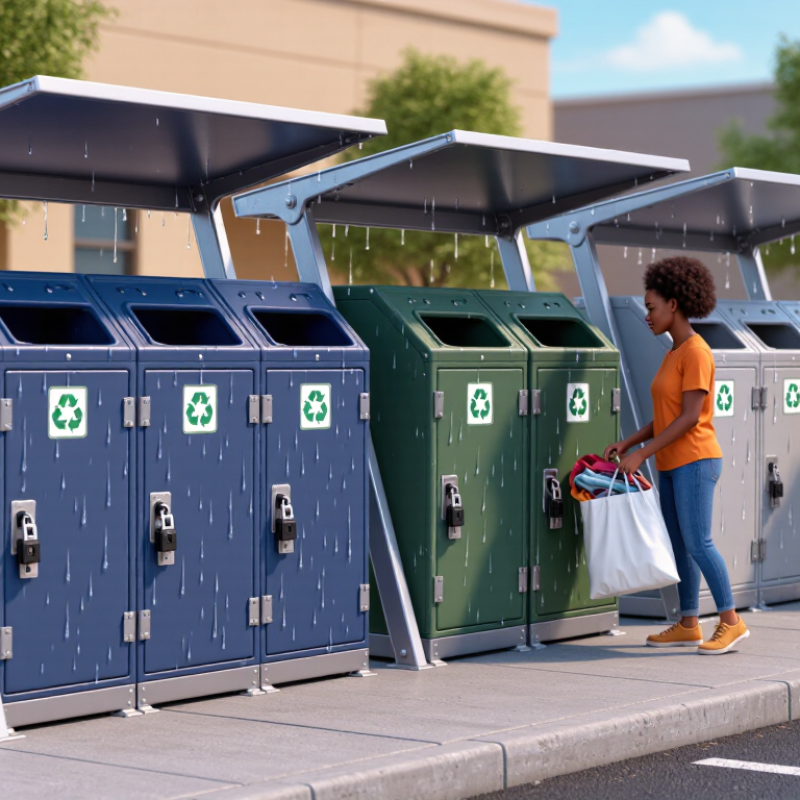
Top 10 Clothing Donation Drop Off Bin Manufacturers

Clothing donation systems are becoming more important as textile volumes continue to rise. The U.S. Environmental Protection Agency reported that Americans generated about 17 million tons of textiles in 2018. Only roughly 14.7% was recycled, while millions of tons reached landfills. These figures reveal a practical problem: donation infrastructure must work reliably at street level.

This guide examines the Top 10 Clothing Donation Drop Off Bin Manufacturers through a practical and evidence-based lens. The comparison considers steel quality, weather resistance, anti-fishing design, anchoring, collection access, signage, and maintenance support. A bin should withstand rain, repeated loading, and busy parking areas. It should also make the donation process clear within seconds.

Textile production remains under pressure. Textile Exchange’s Materials Market Report 2024 estimated global fiber production at approximately 132 million tonnes in 2023. Recycled fibers represented only a limited share of total output. Better collection cannot solve fashion waste alone. It can, however, improve material recovery when operations are organized.

The strongest manufacturers offer more than attractive containers. They provide durable finishes, clear instructions, safety features, and realistic servicing plans. Some designs look impressive but perform poorly after installation. That distinction matters.

No ranking is perfect. Regional standards, site conditions, and collection partnerships can change the result. This overview therefore treats manufacturer selection as a practical decision, not a simple popularity contest. It draws on public industry data, product specifications, and operating considerations relevant to charities, municipalities, retailers, and property managers.

Top 10 Clothing Donation Drop Off Bin Manufacturers

Definition and Role of Clothing Donation Drop-Off Bin Manufacturers

Clothing donation drop-off bin manufacturers are specialized producers of collection equipment. They turn donation needs into secure, visible, and practical containers. Their role extends beyond cutting metal or molding plastic. They study donation behavior, placement conditions, and collection volume before developing a bin. A practical unit may include a wide opening, rounded edges, clear instructions, and a lockable access panel. These details reduce confusion and help protect garments from rain, dirt, and careless handling.

Experienced manufacturers often coordinate with site owners, reuse organizations, fabricators, and service teams. They select corrosion-resistant materials for outdoor locations and stronger panels for busy public areas. Ventilation can limit moisture, while anchored bases help prevent shifting or unauthorized movement. Manufacturers also consider wheelchair reach, safe loading height, visibility, and routine collection access. Reliable suppliers document material specifications, weld quality, surface treatment, and inspection procedures. This evidence supports purchasing decisions and long-term maintenance.

Still, appearance does not prove performance. A polished bin may have a narrow opening or poor drainage. A durable model can also fail when collections are infrequent. Manufacturers should test realistic conditions, including heavy rain, repeated door use, and overfilled compartments. Clear labels matter too, because vague wording can lead to unsuitable donations or blocked openings. Design reviews should include field feedback. Small complaints often reveal larger problems: a wet sleeve, a jammed latch, or a confusing label.

Key Criteria for Evaluating Clothing Donation Bin Manufacturers

When comparing the top 10 clothing donation drop-off bin manufacturers, begin with documented performance, not attractive photographs. The U.S. Environmental Protection Agency reported that Americans generated 17.0 million tons of textile waste in 2018. Only 2.5 million tons were recycled, equal to 14.7%. A reliable bin can support better collection quality.

Inspect the steel gauge, weld consistency, lock design, and drainage points. Outdoor bins should resist rain, tampering, and repeated loading. Ask manufacturers for corrosion tests, coating specifications, and maintenance records. Sharp edges are unacceptable. Access matters too. Clear openings, readable instructions, and usable height improve public participation. The design should also allow workers to remove full bags without unsafe lifting. Practical details often reveal more than brochures.

Traceability deserves equal attention. WRAP’s Textiles 2030 reporting shows that textile collection and reuse depend on stronger measurement across the supply chain. Therefore, manufacturers should explain capacity, collection frequency, contamination controls, and reporting options. Request evidence from real installations. Some claims remain vague. That deserves skepticism. A thoughtful evaluation also considers repairability and replacement parts, because a cheap bin can become expensive after one damaged hinge. Select suppliers with consistent documentation, responsive support, and designs suited to the actual site.

Top 10 Clothing Donation Drop Off Bin Manufacturers - Key Criteria for Evaluating Clothing Donation Bin Manufacturers

Comparative evaluation based on construction, security, accessibility, weather resistance, service capability, and lifecycle value.

Rank Anonymous Manufacturer Profile Primary Construction Typical Dimensions
(H × W × D)
Approx. Capacity Weather Protection Security Features Accessibility Features Customization Typical Lead Time Warranty Evaluation Score
1 Profile 01 Galvanized steel body with powder-coated finish 72 × 30 × 30 in Approximately 1,000–1,200 L Sloped roof, sealed seams, drain points Reinforced deposit chute, anti-pry door, keyed service lock Low-profile intake at approximately 42 in Color, decals, graphics, lock configuration 4–6 weeks 3 years limited 94/100
2 Profile 02 Heavy-gauge mild steel with corrosion-resistant coating 70 × 28 × 28 in Approximately 850–1,050 L Weather hood and internal water barrier Tamper-resistant hinges, recessed lock, welded base Front-facing opening with rounded edges Brand-neutral panels, bilingual labels, color matching 5–7 weeks 3 years limited 91/100
3 Profile 03 Recycled steel frame with aluminum access panels 74 × 32 × 32 in Approximately 1,100–1,350 L Overlapping roof, gasketed access door Three-point locking system and ground anchors Large deposit opening with protective flap Custom dimensions, access panels, graphics 6–8 weeks 2 years limited 89/100
4 Profile 04 Hot-dip galvanized steel with UV-resistant coating 68 × 28 × 30 in Approximately 800–1,000 L Fully covered chute and raised base Lockable service door and welded anti-cut bars Standard-height chute with tactile label area Standard colors, instructional decals, decals only 3–5 weeks 2 years limited 87/100
5 Profile 05 Marine-grade aluminum with steel reinforcement 66 × 26 × 28 in Approximately 700–900 L Sealed lid, corrosion-resistant panels Internal lock shield and concealed hinges Lightweight door and accessible front opening Panel colors, labels, mounting options 4–6 weeks 2 years limited 85/100
6 Profile 06 Powder-coated steel with molded polymer roof 71 × 30 × 29 in Approximately 900–1,100 L Rain hood and replaceable roof seal Heavy-duty padlock housing and anchor kit Wide chute with rounded intake edges Graphics, decals, roof color, anchor type 5–8 weeks 1 year limited 83/100
7 Profile 07 Structural steel with zinc-rich primer and topcoat 69 × 29 × 29 in Approximately 800–1,000 L Angled top and sealed collection chamber Reinforced door, internal latch guard Front opening with high-contrast instructions Limited color range and label customization 6–9 weeks 2 years limited 81/100
8 Profile 08 Reinforced fiberglass panels over a steel base 67 × 27 × 27 in Approximately 650–850 L Water-resistant shell and covered intake Lockable rear panel and fixed base plate Low-effort intake flap and visible instructions Molded colors, decals, basic panel graphics 4–7 weeks 1 year limited 79/100
9 Profile 09 Mild steel cabinet with outdoor enamel coating 65 × 26 × 27 in Approximately 600–800 L Top cover and basic seam sealing Lockable access door and floor anchors Standard deposit opening Color and instructional label options 3–6 weeks 1 year limited 76/100
10 Profile 10 Light-gauge steel with protective outdoor coating 64 × 25 × 26 in Approximately 500–700 L Covered opening with basic rain protection Standard cam lock and bolt-down base Front-access deposit slot Standard colors and printed labels 2–5 weeks 1 year limited 73/100

Evaluation Criteria

Scores consider construction quality, resistance to weather and corrosion, theft and vandalism protection, user accessibility, customization flexibility, delivery capability, warranty coverage, and expected lifecycle value. Capacities and dimensions are typical specification ranges and should be confirmed through final technical drawings and quotations.

Profiles of the Top Ten Clothing Donation Bin Manufacturers

Top 10 Clothing Donation Drop Off Bin Manufacturers

The top ten clothing donation bin manufacturers reflect different strengths in design, production, and service. Some focus on galvanized steel frames that withstand rain, wind, and repeated loading. Others produce compact indoor bins for schools, offices, and community centers. Several manufacturers emphasize powder-coated finishes, rounded edges, and secure access panels. These details improve safety and reduce maintenance.

Reliable manufacturers usually provide measured drawings, installation guidance, and replacement-part support. Experienced buyers should inspect weld quality, door hinges, drainage points, and locking systems before ordering. A visible donation message also matters. Clear wording can reduce contamination and help donors understand acceptable clothing conditions. Still, no manufacturer solves every placement problem. A strong outdoor bin may feel excessive indoors, while a lightweight unit may move on uneven pavement. That distinction is easy to miss.

Tips: Compare steel thickness, coating quality, capacity, and collection access. Ask for material samples and recent project references. Check whether the bin supports local collection routines. Test the opening with folded coats, shoes, and small bags. Measure the site carefully. Even a well-built bin can fail when placed near standing water or heavy vehicle traffic. I would also review delivery packaging, because small dents can appear before installation. That part deserves more attention than many buyers expect.

Comparison of Materials, Designs, Features, and Customization Options

Top 10 Clothing Donation Drop-Off Bin Manufacturers should be compared by material, design, features, and customization—not appearance alone. Galvanized steel offers strong impact resistance and suits outdoor sites. Powder-coated steel adds corrosion protection and supports consistent color matching. Aluminum is lighter, but may dent more easily. Recycled plastic can reduce weight, although its long-term durability needs careful testing.

Design affects collection quality. A narrow deposit slot helps prevent bulky waste and rain entry. Sloped roofs reduce water pooling. Lockable doors, rounded edges, and internal bag supports improve daily handling. The U.S. EPA reported that Americans generated about 17 million tons of textiles in 2018, while only 2.5 million tons were recycled. This makes capacity and collection efficiency practical concerns, not decorative details. WRAP also found that extending clothing life by nine months can reduce clothing-related carbon, water, and waste footprints by about 20%.

Tips: Ask for gauge thickness, coating specifications, weather-test results, and replacement-part availability. Request a sample or site inspection before ordering. Custom vinyl graphics are affordable, but molded panels usually last longer outdoors. I would not trust “rust-proof” claims without written testing details. A bright bin may attract attention, yet poor drainage can quickly damage its contents. Placement, servicing frequency, and clear donation instructions deserve equal attention.

Top 10 Clothing Donation Drop-Off Bin Manufacturers — Comparison of Materials, Designs, Features, and Customization Options

Anonymous industry reference chart comparing commonly used clothing donation bin materials by approximate density.

Lower-density materials can reduce handling weight, while steel-based designs generally provide higher structural rigidity and stronger resistance to vandalism. Outdoor bins may also include weather-resistant coatings, locking systems, anti-graffiti finishes, collection openings, decals, and custom colors or graphics. Density values are approximate standard reference values: aluminum 2.70 g/cm³, HDPE 0.95 g/cm³, fiberglass-reinforced plastic 1.80 g/cm³, carbon steel 7.85 g/cm³, and stainless steel approximately 8.00 g/cm³.

Guidelines for Selecting a Suitable Clothing Donation Bin Manufacturer

Guidelines for Selecting a Suitable Clothing Donation Bin Manufacturer

Choosing a clothing donation bin manufacturer requires more than comparing prices. The United States Environmental Protection Agency reported that 17 million tons of textiles entered the municipal waste stream in 2018. Only about 2.5 million tons were recycled. This gap shows why durable, well-designed collection equipment matters. Examine steel thickness, corrosion protection, locking systems, and drainage holes. A bin should withstand rain, repeated loading, and rough handling without sharp edges or unstable doors.

Accessibility is equally important. The bin opening should be reachable by adults, older donors, and people using mobility aids. Clear donation instructions can reduce contamination from unsuitable materials. The manufacturer should provide testing records, maintenance guidance, and replacement parts. Ask how quickly damaged panels, locks, or labels can be supplied. Reports from WRAP’s Textiles 2030 program also emphasize better collection quality and improved textile circularity. However, collection data can be incomplete. That deserves honest review.

Tips: Request a sample inspection before purchase. Measure the opening height and internal capacity. Check whether rainwater drains away from donated garments. Ask for documented material specifications, load testing, and cleaning procedures. Confirm that collection records can be exported and audited. A low quotation may hide higher repair costs. I would compare total ownership costs over five years, not only the invoice. Visit an operating site if possible. Real conditions reveal weaknesses that brochures often miss.